


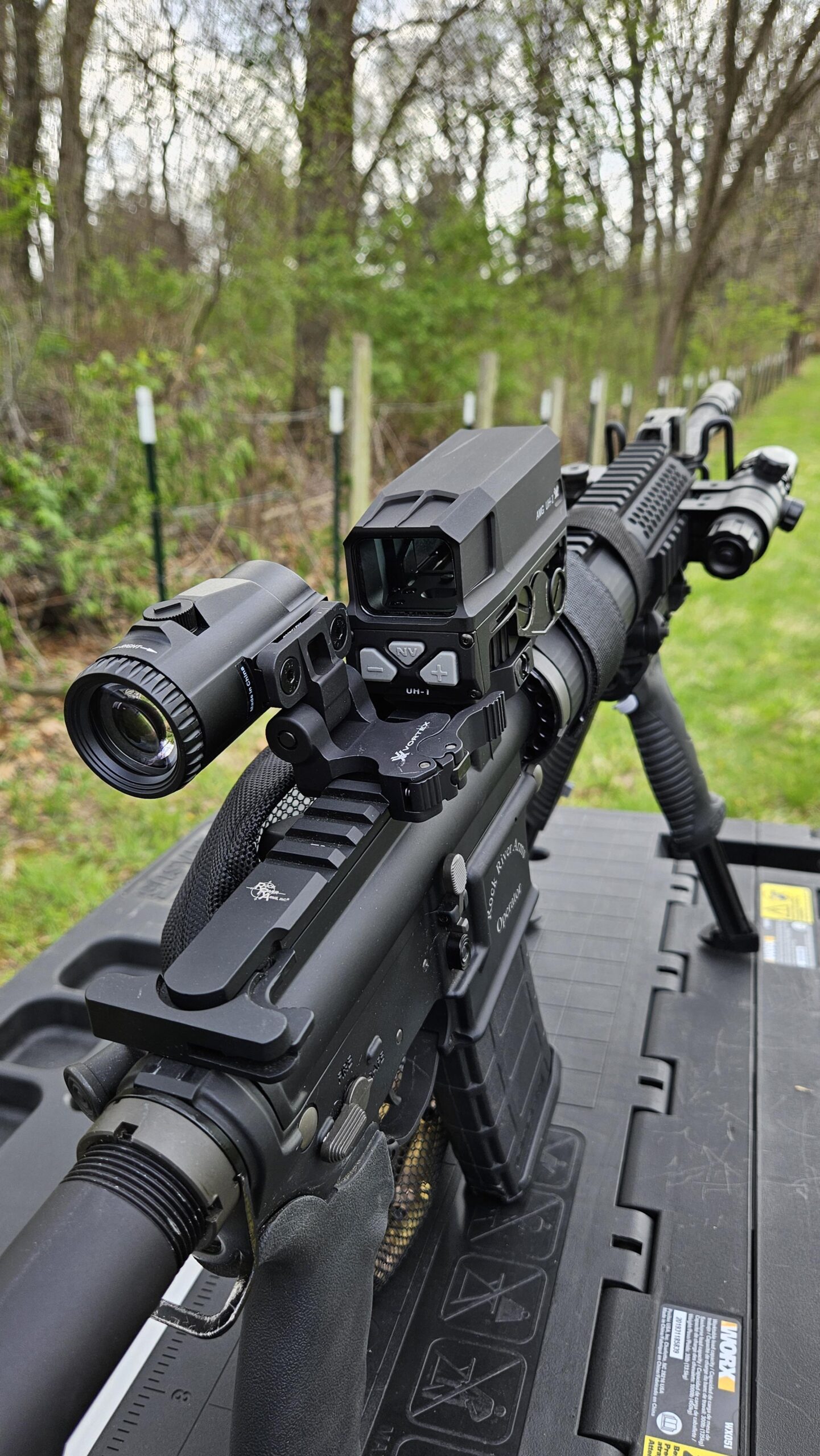
How to Choose the Right Optic for Your AR-15
The AR-15 is one of the most versatile rifle platforms available. The same rifle can be configured for home defense, competition shooting, hunting, range practice, or longer-range shooting.
But one of the biggest decisions every AR-15 owner faces is choosing the right optic.
Should you go with a simple red dot? A rugged holographic sight? A low-power variable optic (LPVO)? A prism optic? Or should you add a magnifier to a non-magnified optic?
The answer depends on one important factor:
What do you want your AR-15 to do?
There is no single “best” AR-15 optic. The ideal choice depends on your shooting distance, priorities, budget, and how you use your rifle.
What to Consider Before Choosing an AR-15 Optic
Before comparing optic styles, consider these factors.
Shooting Distance
Your typical shooting distance should heavily influence your optic choice.
| Distance | Best Optic Choices |
|---|---|
| 0-100 yards | Red dot, holographic sight |
| 50-300 yards | Red dot + magnifier, prism optic, LPVO |
| 100-500 yards | LPVO, magnified scope |
| 500+ yards | Higher magnification scopes |
A rifle used primarily at close range does not need a large, heavy scope. Likewise, a rifle designed for longer-range shooting benefits from magnification.
Speed vs Precision
Every optic involves a compromise between speed and precision.
Non-magnified optics:
- Faster target acquisition
- Easier shooting with both eyes open
- Lightweight and simple
Magnified optics:
- Better target identification
- Improved accuracy at distance
- More capability for precision shooting
The best optic balances these factors for your specific needs.
Red Dot Sights for AR-15 Rifles
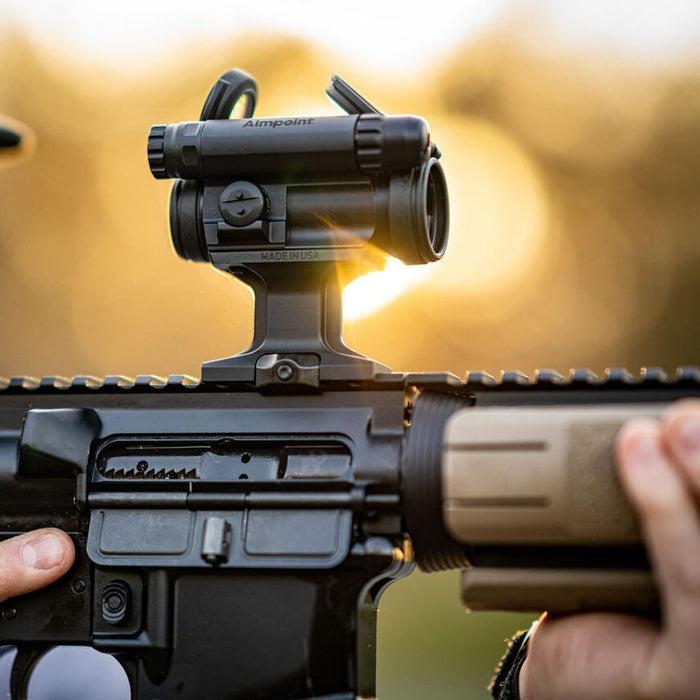
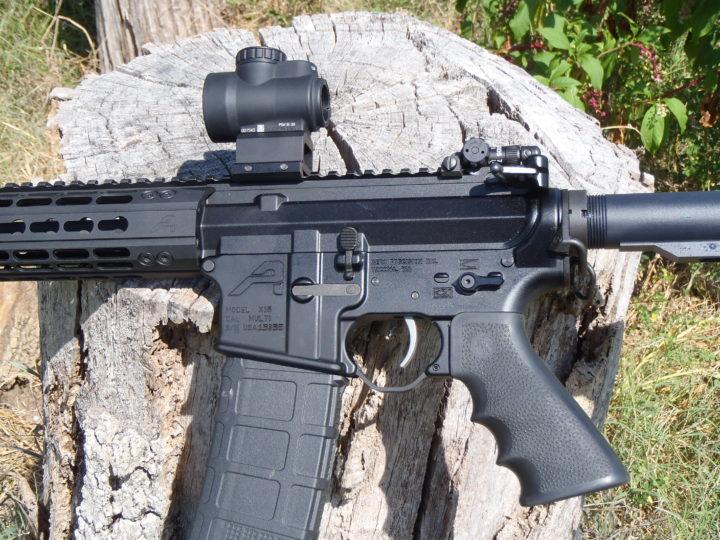
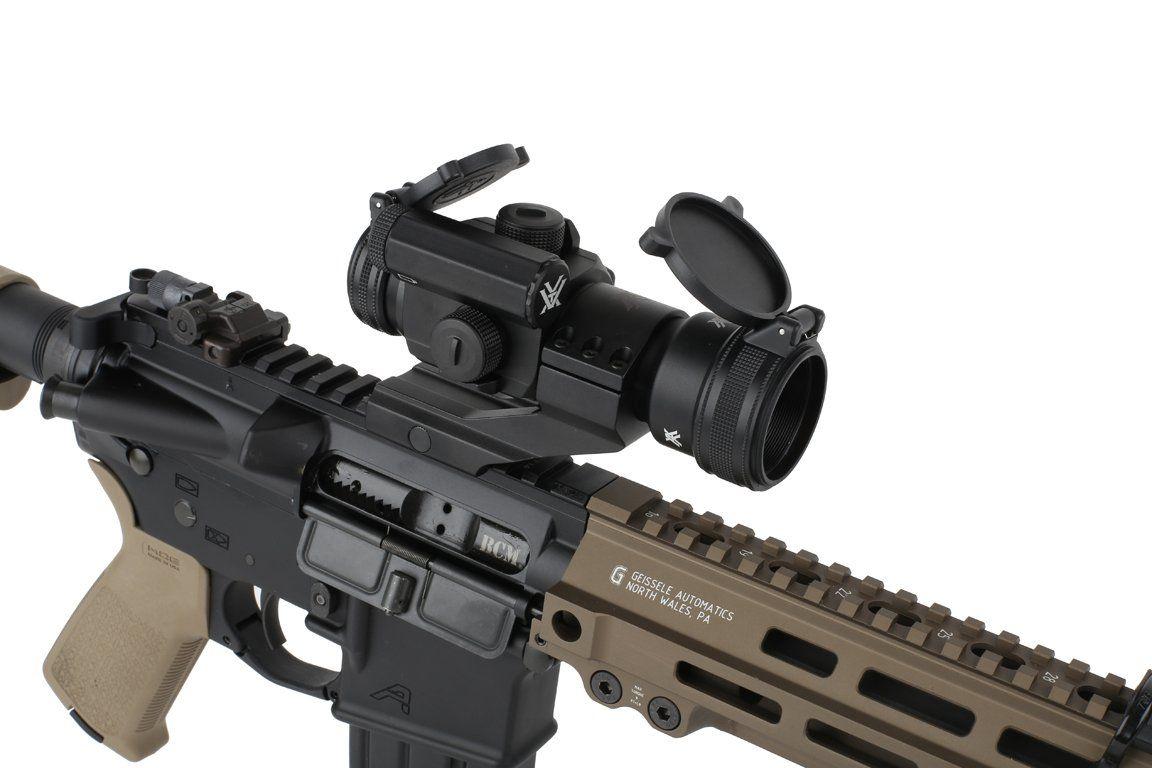
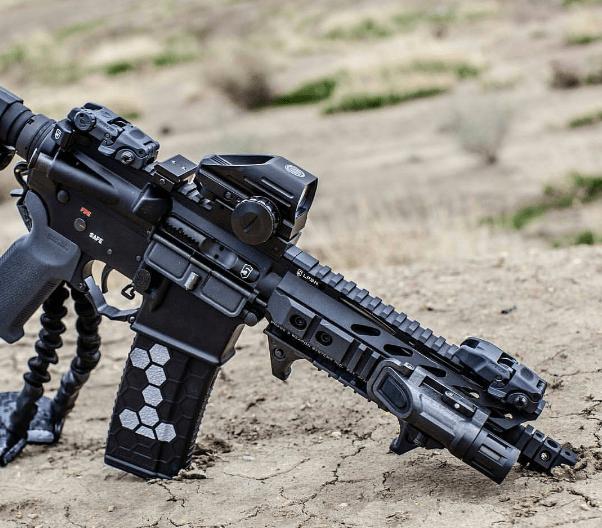
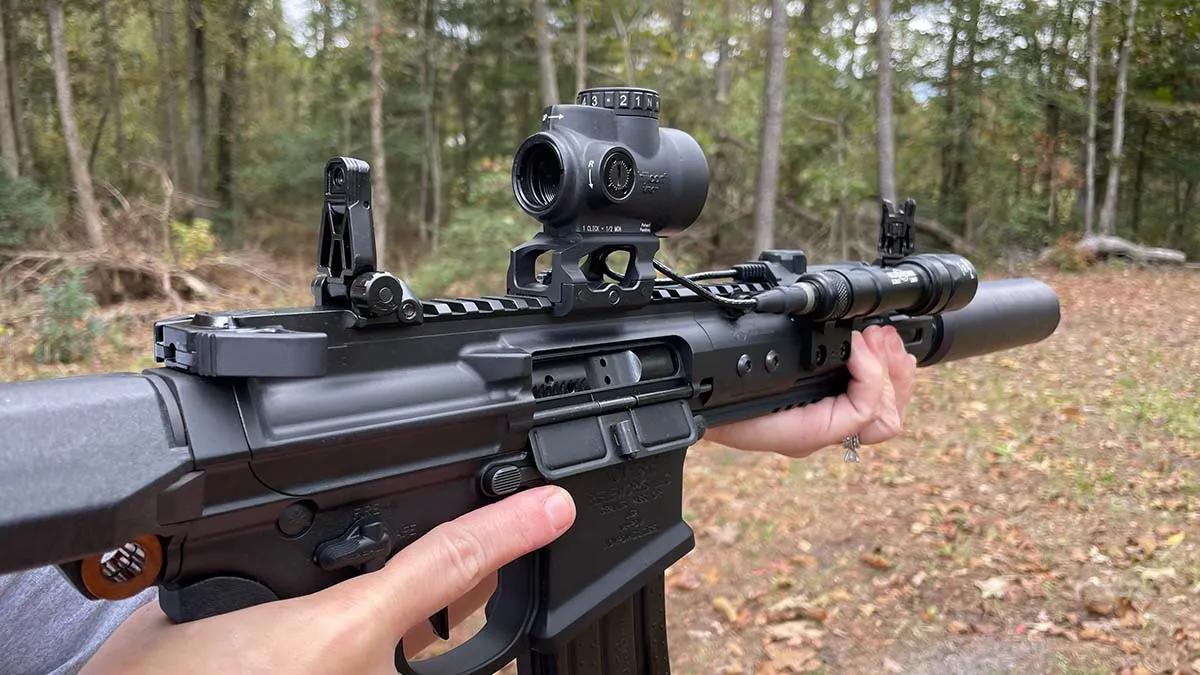
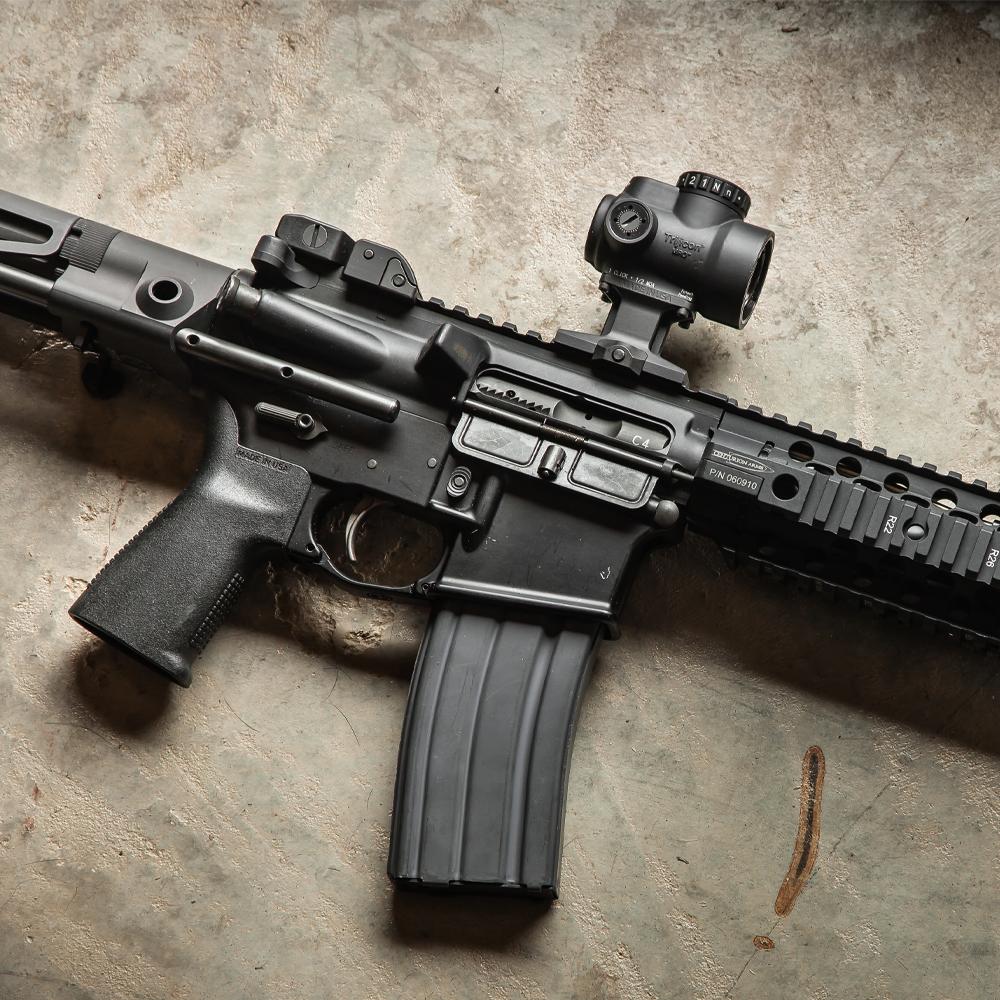
Red dot sights are among the most popular AR-15 optics because they are simple, lightweight, and extremely fast.
A red dot uses an illuminated aiming point that allows shooters to quickly place the reticle on target without worrying about eye relief or magnification.
Advantages of Red Dot Optics
Extremely Fast Target Acquisition
The biggest advantage of a red dot is speed. Shooters can aim with both eyes open and quickly transition between targets.
Lightweight
A quality red dot adds minimal weight compared to a traditional scope.
Excellent Close-Range Performance
Red dots excel from close range out to approximately 200 yards depending on the shooter and rifle setup.
Excellent Battery Life
Many modern red dots offer thousands of hours of operation on a single battery.
Disadvantages of Red Dot Optics
Limited Range Capability
A red dot does not magnify the target, making smaller targets at longer distances more difficult.
No Magnification
Shooters must rely on their own vision and skill for longer-range shots.
Astigmatism Issues
Some shooters experience a blurry or distorted dot due to astigmatism.
Best Uses for Red Dots
- Home defense rifles
- Lightweight AR-15 builds
- Range rifles
- Competition shooting
- Close to medium-range shooting
Holographic Sights for AR-15 Rifles
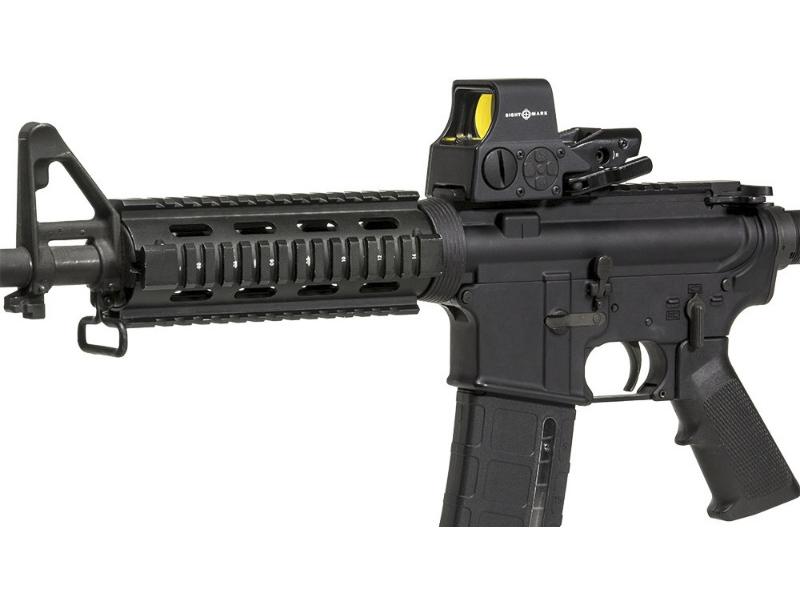
Holographic sights look similar to red dots but use different technology. Instead of reflecting an LED dot, they project a holographic reticle onto the viewing window.
Advantages of Holographic Sights
Fast Target Acquisition
Like red dots, holographic sights allow quick shooting with both eyes open.
Advanced Reticles
Many holographic sights use circle-dot reticles that can help with rapid target engagement.
Durable Design
They are built for demanding environments and are commonly used on duty and competition rifles.
Disadvantages of Holographic Sights
Higher Cost
Quality holographic sights are typically more expensive than red dots.
Shorter Battery Life
The technology requires more power compared to LED-based optics.
More Weight
They are often heavier than compact red dots.
Best Uses for Holographic Sights
- Defensive rifles
- Competition builds
- Duty-style AR-15s
- Shooters prioritizing speed
Adding a Magnifier to a Red Dot or Holographic Sight

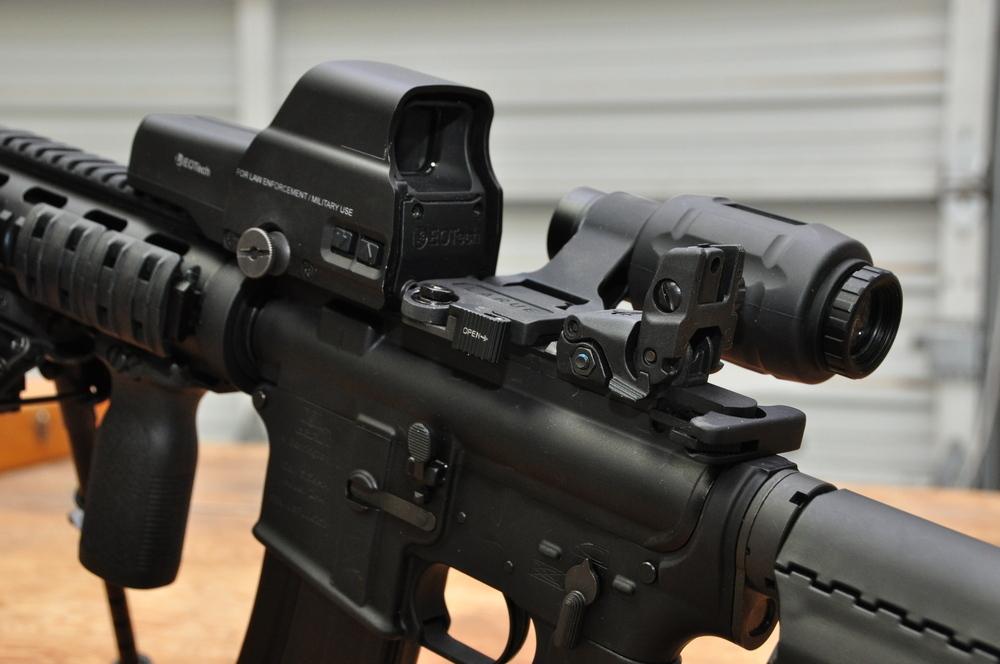
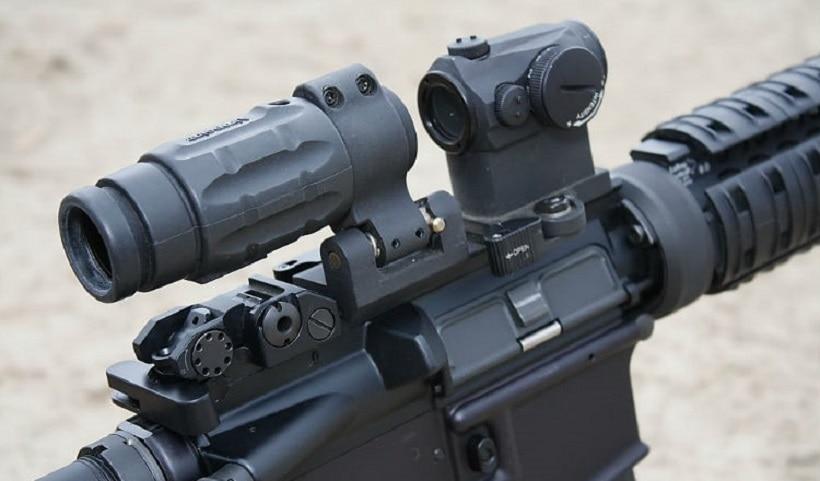

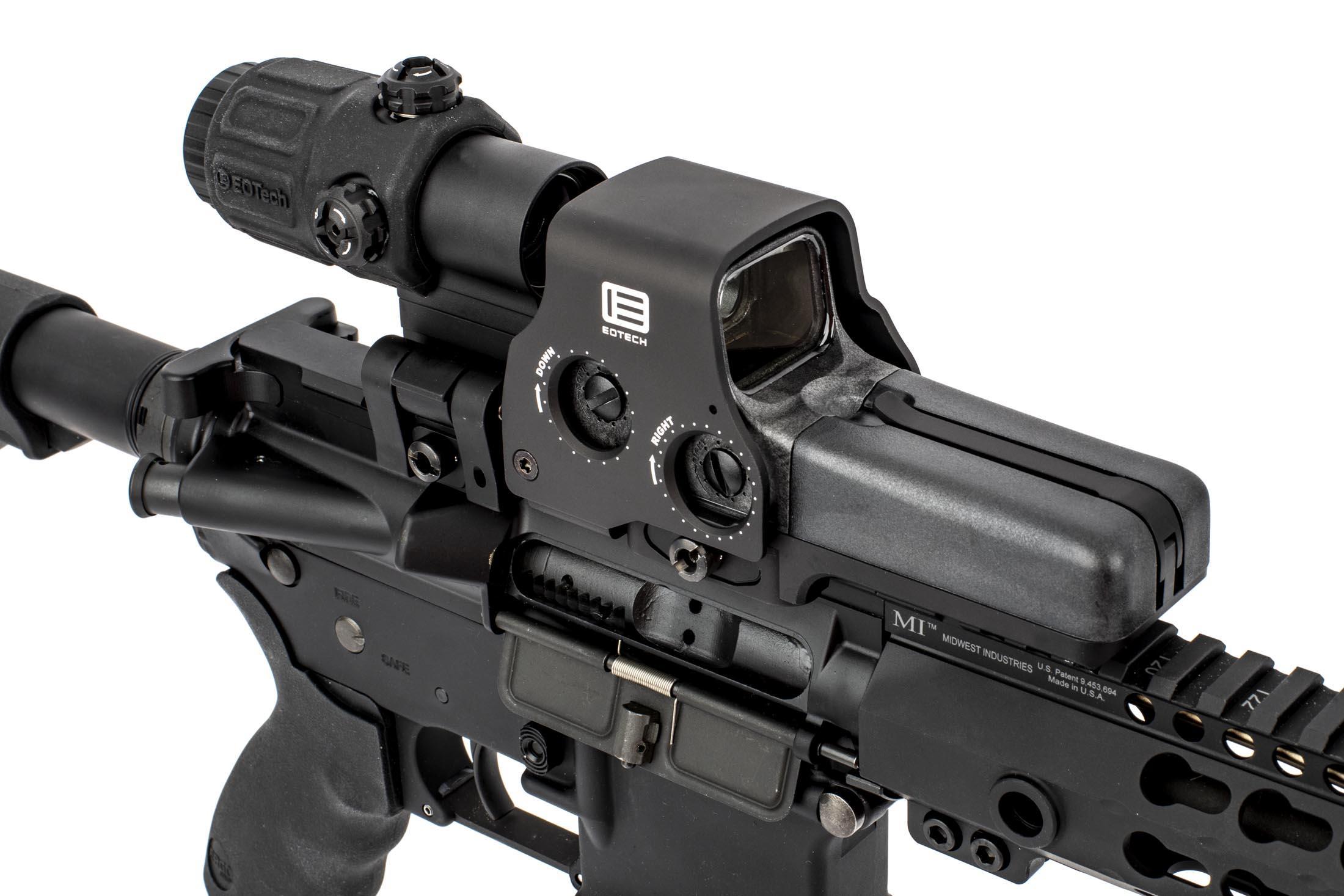
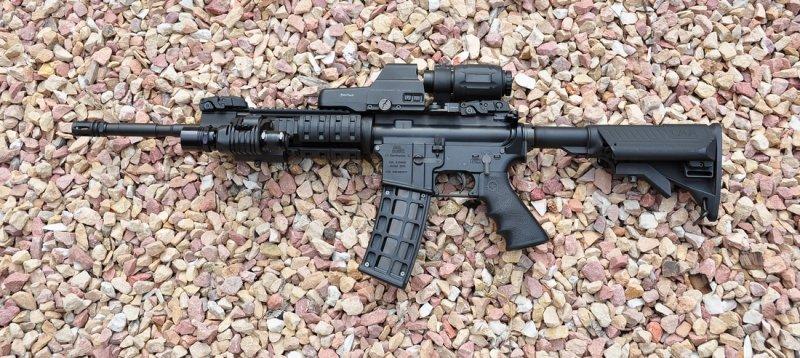
One of the most popular AR-15 optic combinations is pairing a red dot or holographic sight with a magnifier.
A magnifier is a small optic mounted behind the primary sight that provides additional magnification when needed.
Most setups use a flip-to-side mount, allowing the shooter to quickly switch between:
- 1x magnification for close-range shooting
- 3x-5x magnification for longer-range shots
This creates a flexible setup without replacing the speed of a red dot.
Advantages of Red Dot + Magnifier Setups
Maintains Close-Range Speed
When the magnifier is folded away, the rifle functions exactly like a standard red dot setup.
You still get:
- Unlimited eye relief
- Both-eyes-open shooting
- Fast target transitions
Adds Medium-Range Capability
A magnifier helps shooters:
- Identify targets more easily
- Improve accuracy at distance
- Make better use of the AR-15’s capabilities
A 3x magnifier can make a standard AR-15 much more effective at distances beyond typical red dot ranges.
Lightweight Alternative to an LPVO
A red dot and magnifier combination is often lighter and simpler than an LPVO setup.
Disadvantages of Magnifiers
Added Weight
The magnifier and mount add extra weight to the rifle.
Reduced Field of View
Magnification narrows your viewing area compared to shooting at 1x.
Limited Magnification
A magnifier is designed for medium-range shooting, not precision long-range work.
Red Dot + Magnifier vs LPVO
| Feature | Red Dot + Magnifier | LPVO |
|---|---|---|
| Close-range speed | Excellent | Excellent |
| Long-range precision | Good | Better |
| Weight | Lighter | Heavier |
| Eye relief | Unlimited | Limited |
| Magnification | Usually 3x-5x | 1-6x, 1-8x, 1-10x |
| Battery life | Excellent | Lower |
| Simplicity | Excellent | More complex |
LPVO Scopes for AR-15 Rifles
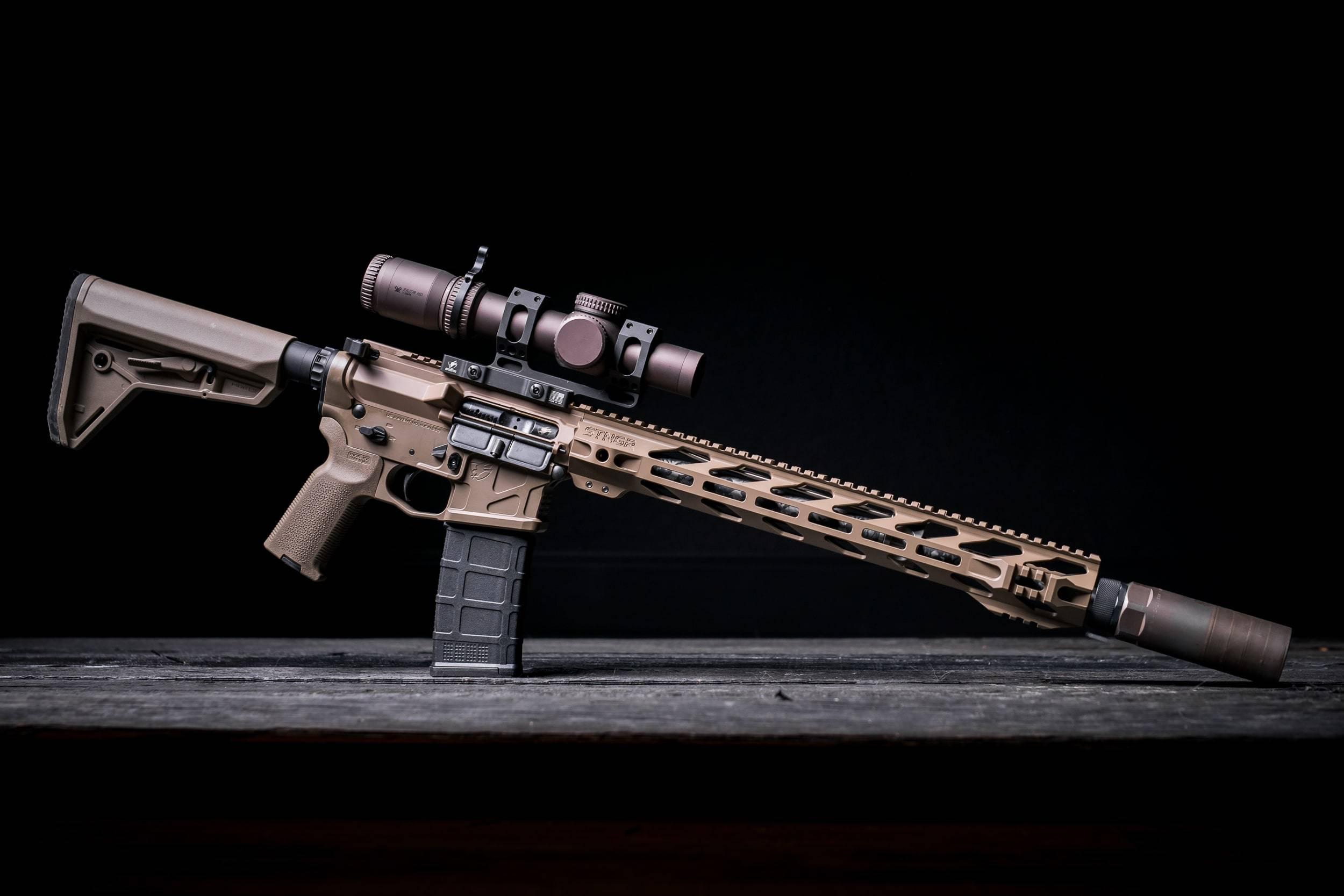
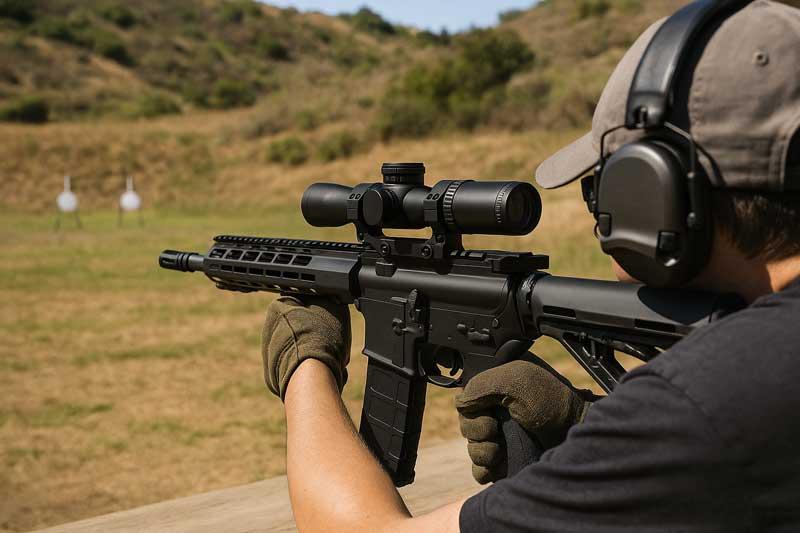
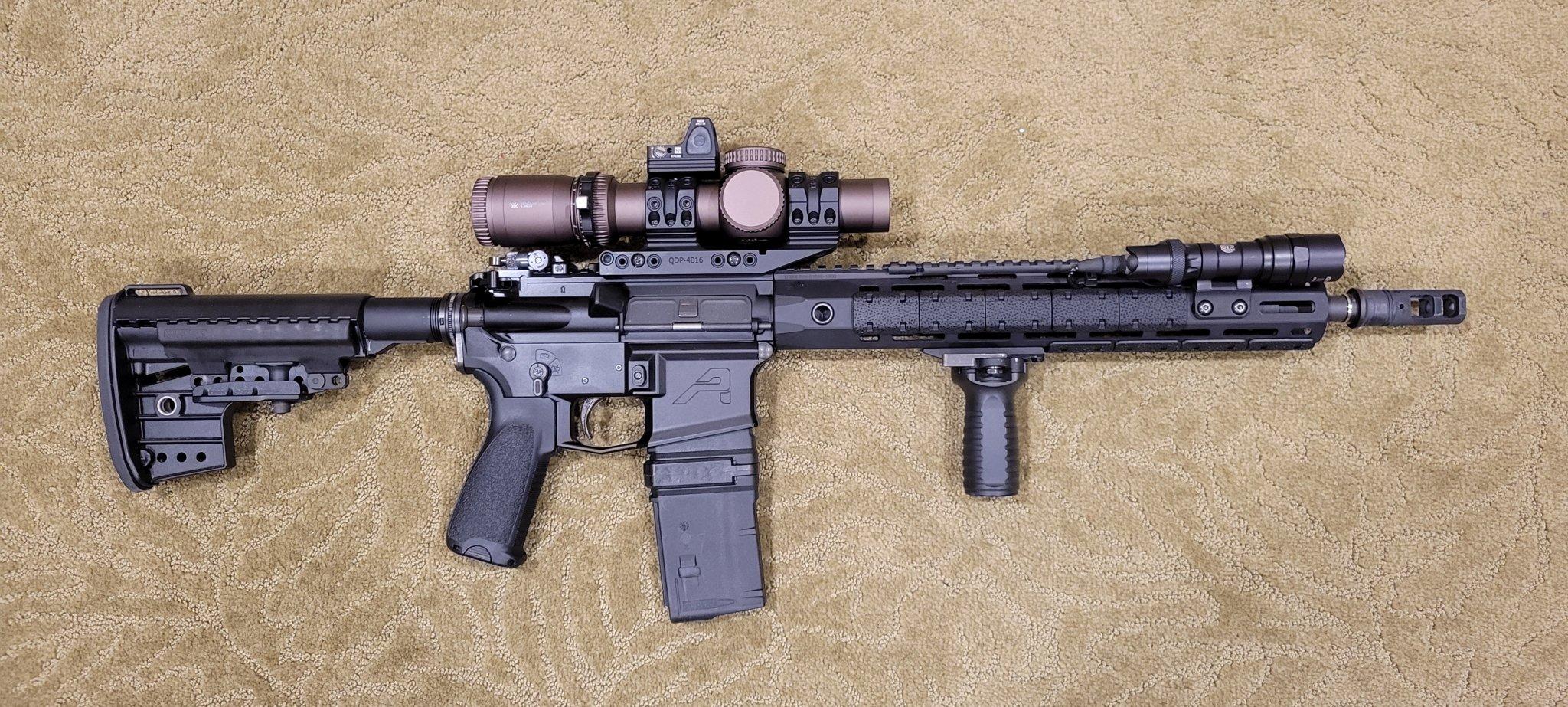

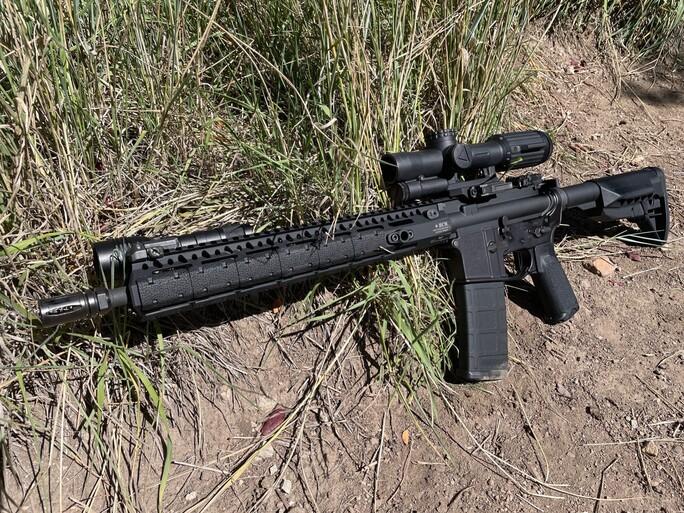
LPVO stands for Low Power Variable Optic and has become one of the most popular AR-15 optic choices.
Common magnification ranges include:
- 1-4x
- 1-6x
- 1-8x
- 1-10x
At 1x, an LPVO provides fast shooting similar to a red dot. Increase magnification and it becomes useful for longer distances.
Advantages of LPVO Optics
Extremely Versatile
An LPVO can handle nearly every shooting situation.
Better Precision
Magnification helps shooters make more accurate shots at distance.
One Optic Does Everything
Many shooters choose an LPVO because they do not need multiple optic setups.
Disadvantages of LPVO Optics
Heavier
LPVOs and mounts add significant weight.
More Expensive
Quality LPVO setups often cost more than red dot systems.
Requires Training
Using magnification effectively takes practice.
Best Uses for LPVOs
- General-purpose AR-15 rifles
- Competition shooting
- Hunting
- Medium-range shooting
- “Do everything” builds
Prism Optics for AR-15 Rifles

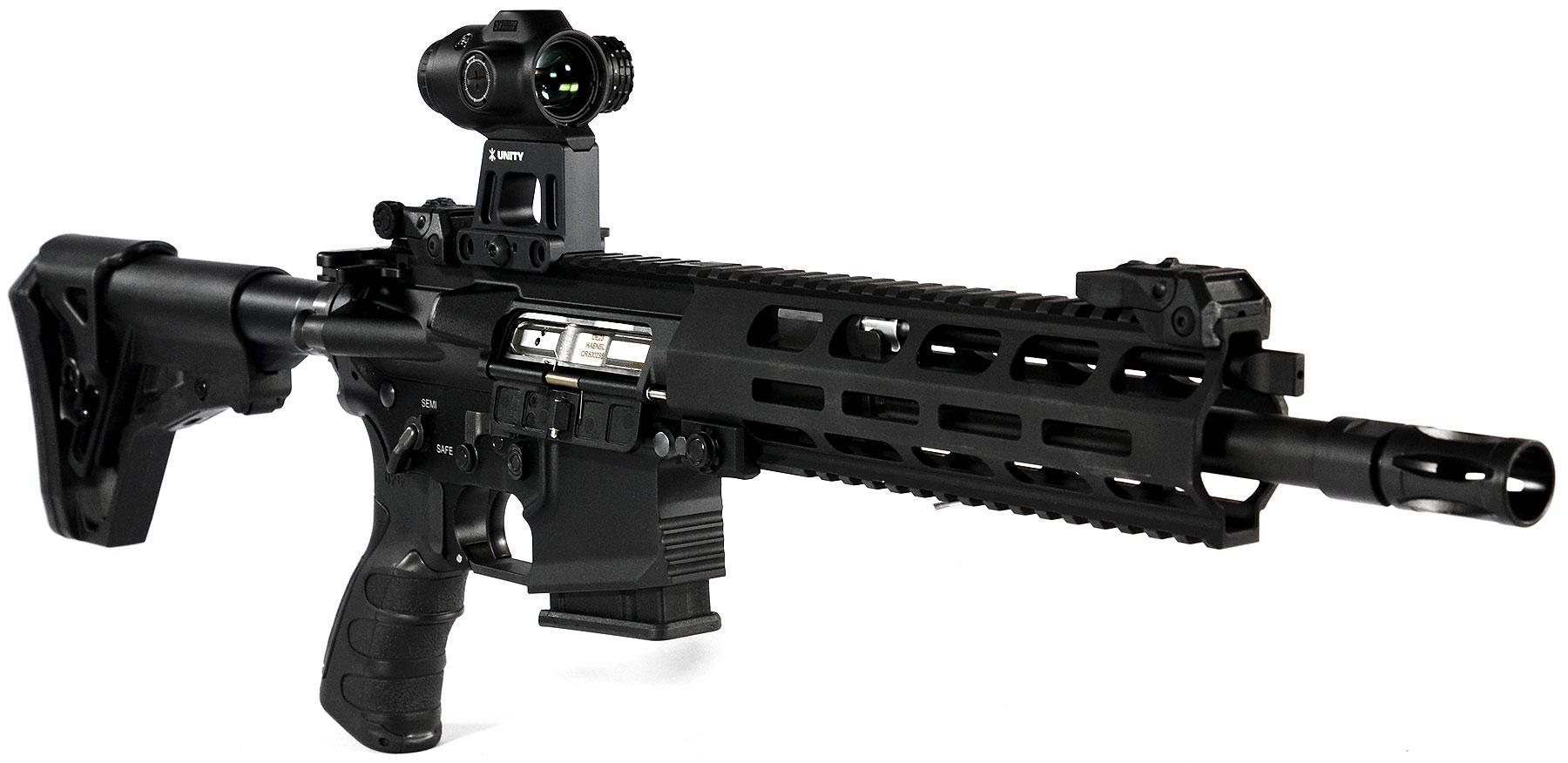

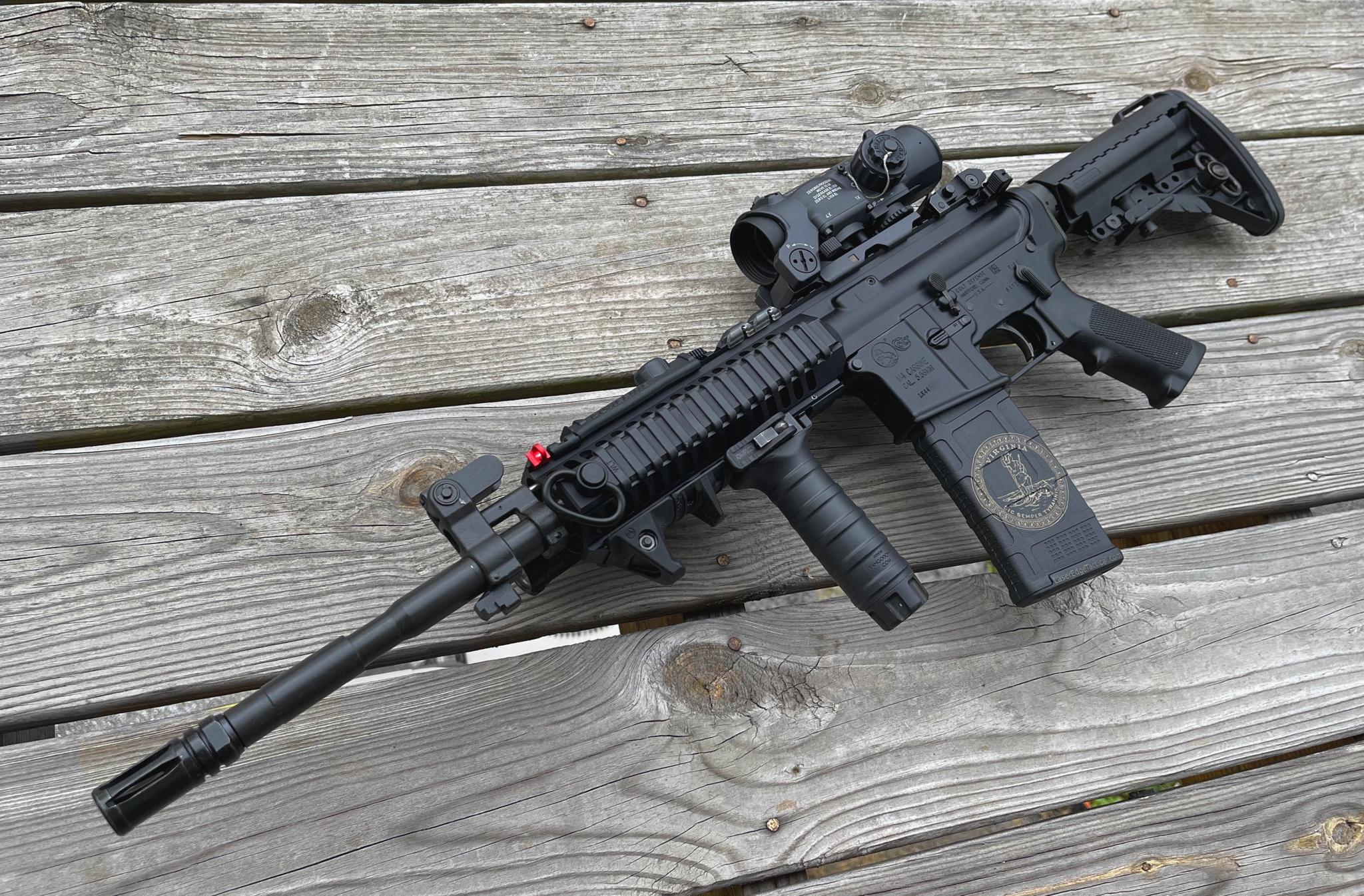
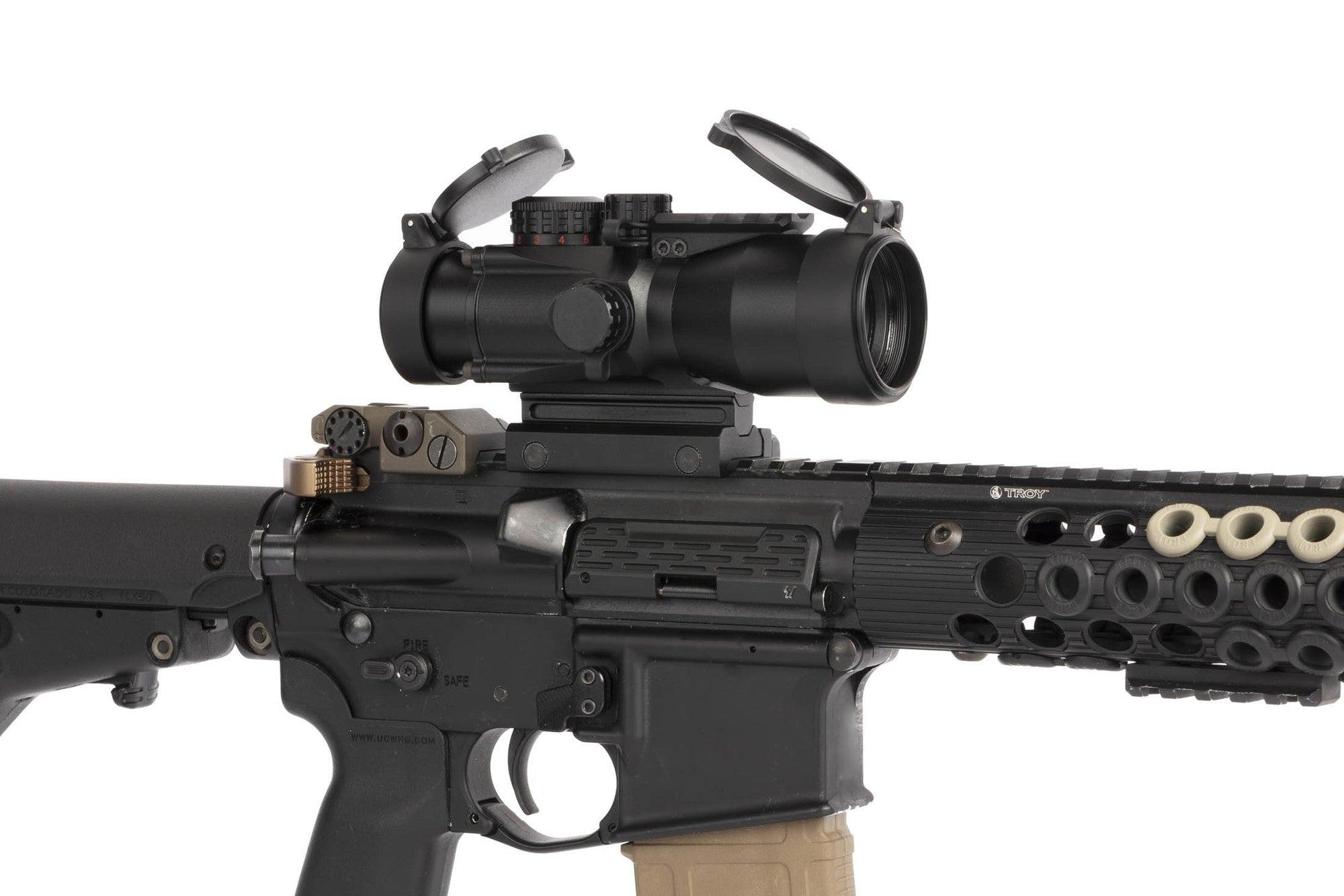
Prism optics provide a middle ground between red dots and traditional scopes.
They use an etched reticle instead of a projected dot, which allows the reticle to remain visible without illumination.
Common magnifications include:
- 1x
- 3x
- 5x
Advantages of Prism Optics
- Crisp etched reticles
- Excellent visibility
- Good option for shooters with astigmatism
- Compact design
Disadvantages
- Limited eye relief
- Usually fixed magnification
- Less flexible than LPVOs
Best Uses for Prism Optics
- Lightweight builds
- Medium-range shooting
- Shooters wanting a traditional reticle
Traditional Magnified Scopes
Traditional rifle scopes are less common on AR-15 rifles but still useful for specialized applications.
Advantages
- Excellent long-range capability
- High precision
- Better target identification
Disadvantages
- Heavy
- Slower up close
- Less versatile
Best suited for:
- Precision AR builds
- Hunting rifles
- Long-range shooting
AR-15 Optic Comparison Chart
| Optic Type | Speed | Range | Weight | Best For |
|---|---|---|---|---|
| Red Dot | ⭐⭐⭐⭐⭐ | Short-Medium | Very Light | Defense, range |
| Holographic | ⭐⭐⭐⭐⭐ | Short-Medium | Light-Medium | Competition, duty |
| Red Dot + Magnifier | ⭐⭐⭐⭐⭐ | Medium | Medium | Versatile rifles |
| Prism | ⭐⭐⭐⭐ | Medium | Light-Medium | Compact builds |
| LPVO | ⭐⭐⭐⭐ | Short-Long | Medium-Heavy | All-around rifles |
| Traditional Scope | ⭐⭐ | Long | Heavy | Precision shooting |
Final Thoughts: Finding the Best AR-15 Optic
Choosing an optic for your AR-15 starts with understanding how you use your rifle.
A red dot is hard to beat for speed and simplicity.
A holographic sight offers similar speed with advanced reticle options.
A red dot with magnifier provides an excellent balance between close-range performance and medium-range capability.
An LPVO is ideal for shooters who want maximum versatility and precision.
A prism optic provides a lightweight option with a crisp etched reticle.
The best AR-15 optic is not necessarily the most expensive one — it is the optic that matches your rifle’s purpose and helps you shoot more effectively.
Choose based on your mission, practice with your equipment, and the right optic will make your AR-15 even more capable.
Before you order: optics, electronic sights, and illumination devices are final sale and cannot be returned. Choose carefully, and ask us if you are unsure which option suits your rifle — see our returns policy.
Optics are not serialized, so anything covered here ships straight to your door. If you are still shopping for the rifle to mount it on, that part goes through a licensed dealer — here is how an FFL transfer works.
Don’t Forget the Mount
An optic is only as good as the thing holding it, and the two have to match — see scope rings, scope mounts and red dot mounts. Rings are cut for one tube diameter (1 inch, 30mm, 34mm), and reflex sights mount to a specific footprint, so check both before ordering.
AR-15 Optic FAQ
What is the best optic for an AR-15?
There is no single best optic — it depends on the distance you shoot. Inside 100 yards a red dot is fastest. From 100 to 400 yards an LPVO or a red dot with a magnifier gives you both speed and precision. Past 400 yards a traditional magnified scope is the better tool.
Do I need a magnifier with a red dot sight?
Only if you shoot past roughly 100 yards. A magnifier keeps the red dot’s close-range speed and adds 3x to 6x when you flip it into place, which is lighter and cheaper than replacing the optic. Below 100 yards it is weight you do not need.
Is an LPVO better than a red dot?
An LPVO is more capable and a red dot is faster. An LPVO at 1x is close to a red dot for speed and gives you real magnification when you need it, but it is heavier, costs more and needs a correct eye position. A red dot is lighter, has no eye box to find and runs for years on one battery.
Are prism optics good for astigmatism?
Yes, and it is the main reason to choose one. A prism optic uses an etched reticle rather than an illuminated dot, so it stays sharp for shooters who see a starburst or smear instead of a clean dot through a red dot sight.
What mount height should an AR-15 optic use?
1.93 inches is the common choice for a modern AR because it lines the optic up with a head-upright shooting position and works with night vision and ear protection. The older 1.54 inch absolute co-witness height sits lower and puts iron sights in the middle of the view.
Do optics have to ship to an FFL?
No. Optics, mounts and magnifiers are not firearms and ship directly to your address. Only the firearm itself has to go to a licensed dealer — see our guide to how FFL transfers work.
>